Boston, Massachusetts, USA
Boston Microgreens Production Optimisation
On-site assessment of a Boston vertical farm, focusing on substrate evaluation, farm-specific nutrient management, crop monitoring and production protocol optimisation.
Project overview
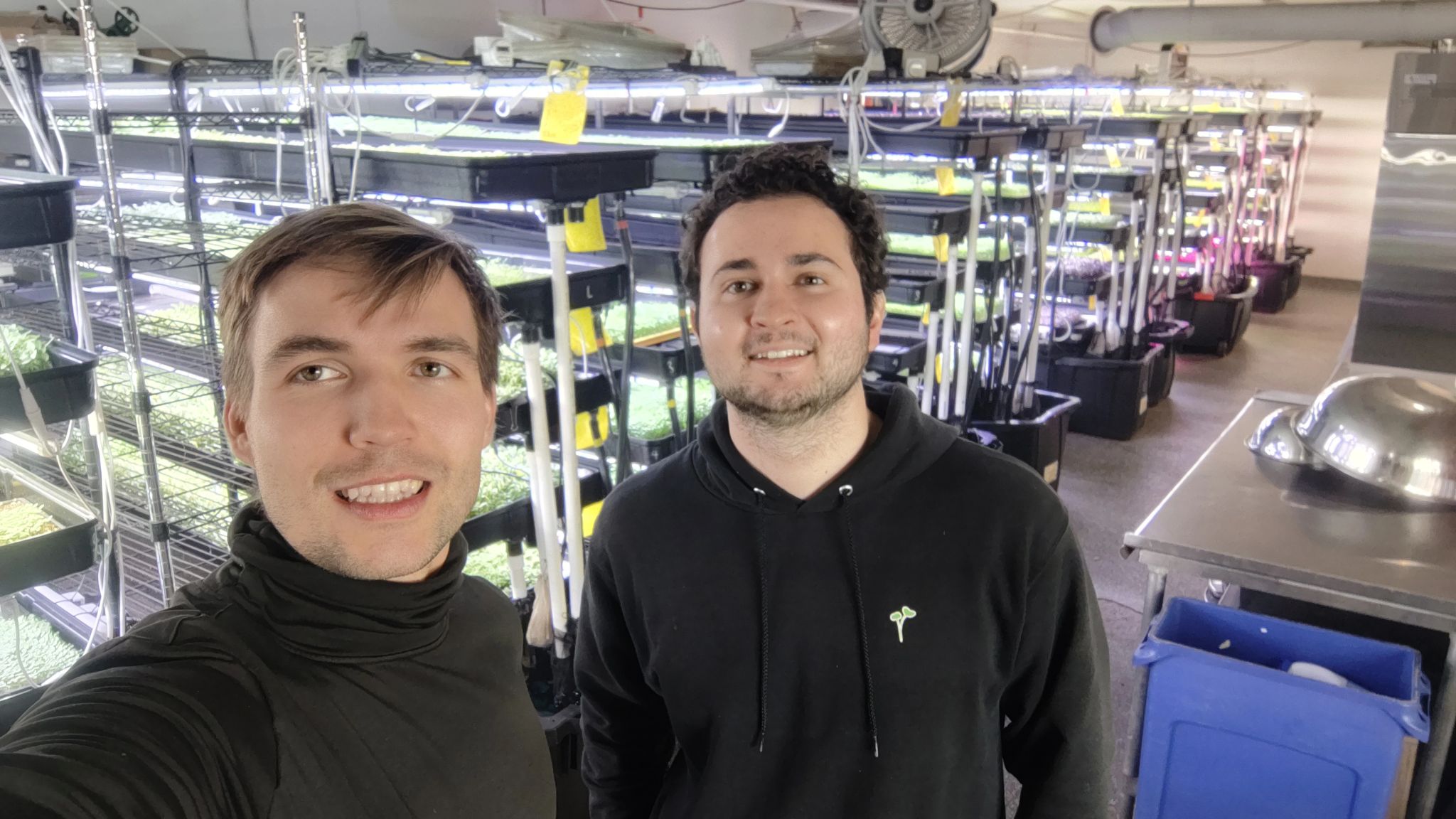
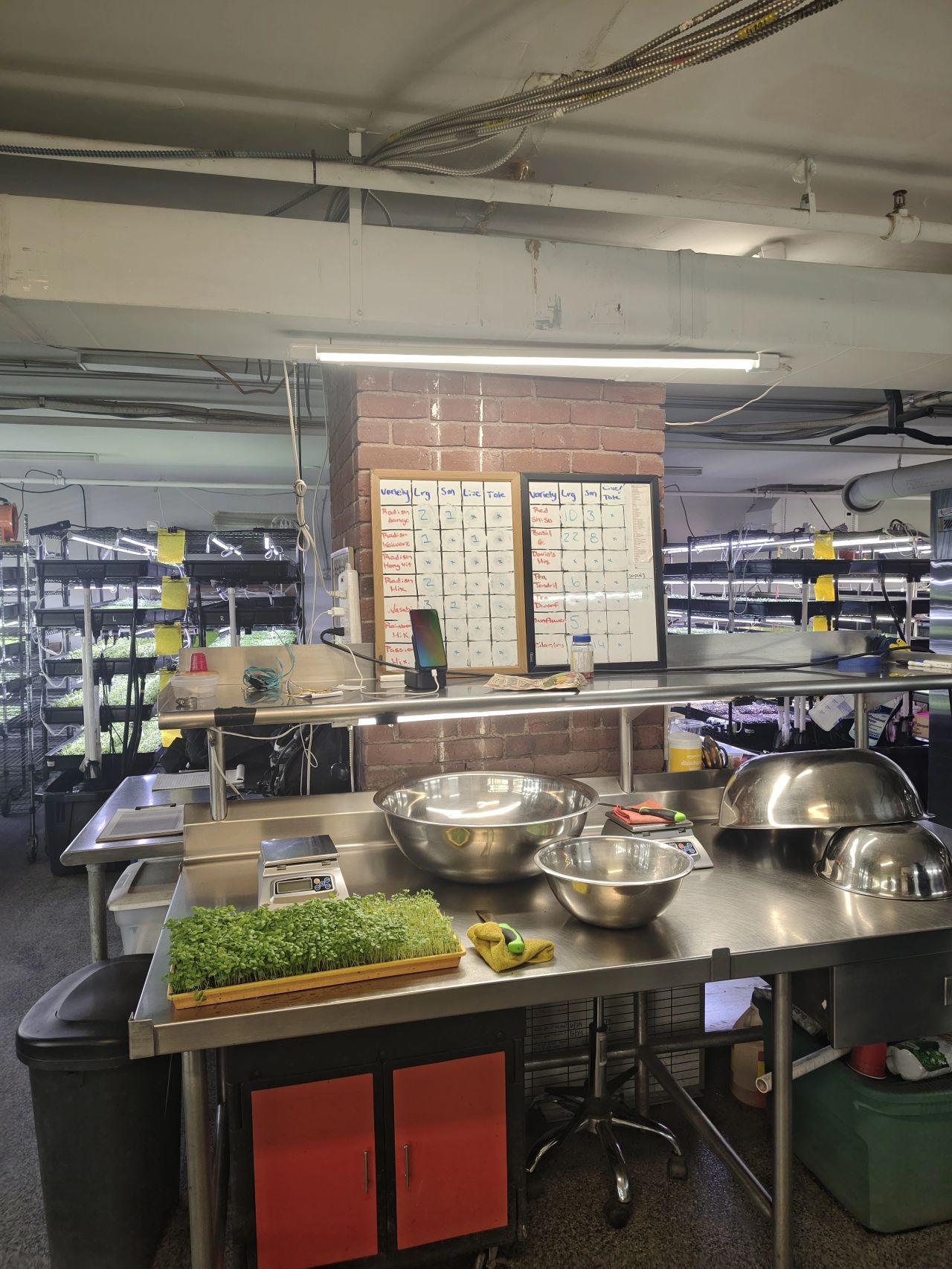
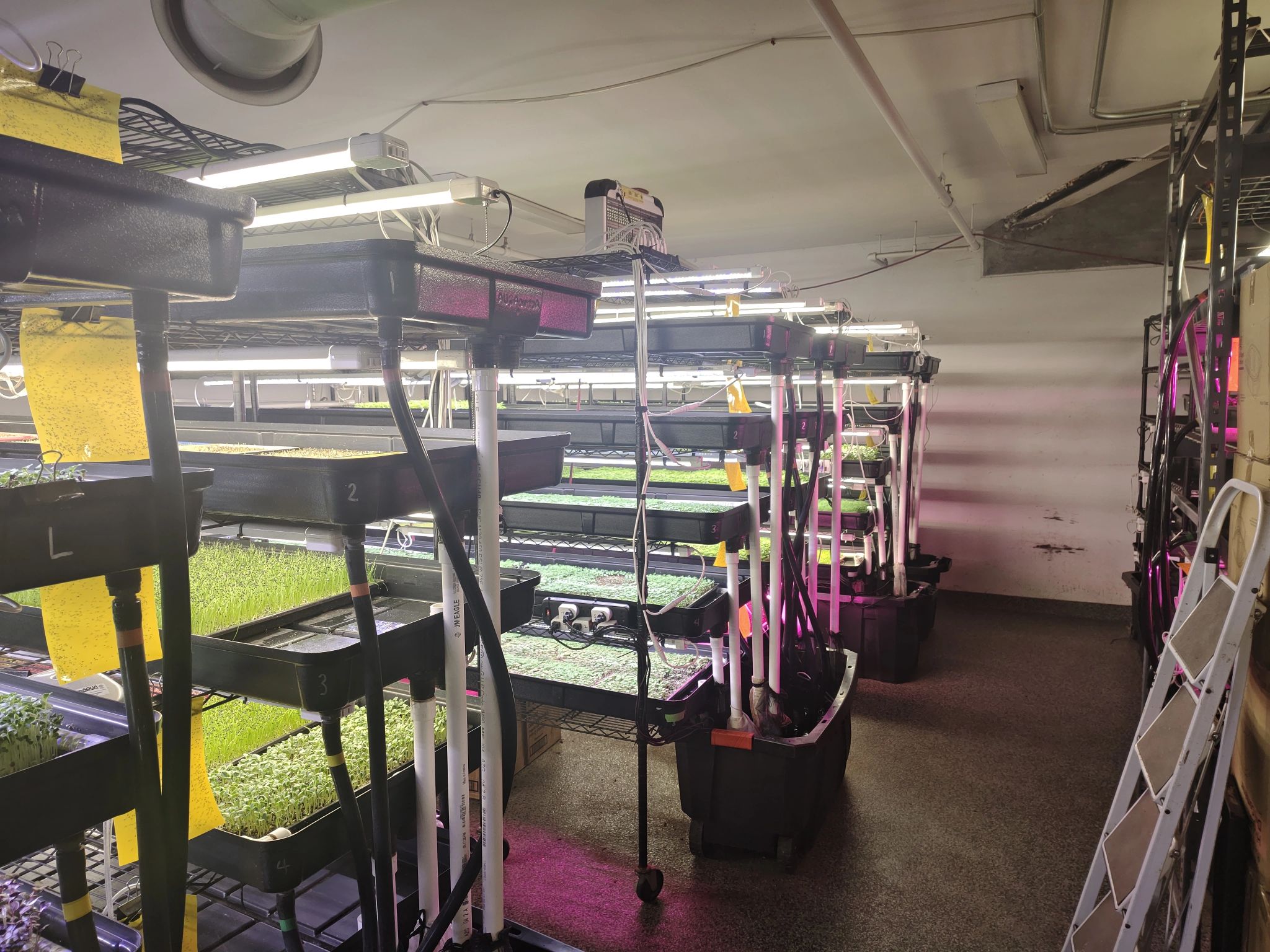
During a Crop Urbanis working visit to Boston, we conducted an on-site assessment at Boston Microgreens, a commercial vertical farm specialising in microgreen production. The working session focused on identifying critical points within the production flow and defining practical improvements that could be tested under real operating conditions. Key areas included the evaluation of alternative growing substrates, the development of a farm-specific hydroponic nutrient solution, refinement of the fertigation strategy, improved crop monitoring and adjustments to production protocols. The objective was to support more consistent crop performance, strengthen control over production inputs and establish a more structured approach to detecting plant stress and operational issues.
Challenges & approach
- Critical points across the commercial microgreen workflow needed to be identified without disrupting daily production.
- Substrate, nutrient solution and fertigation changes had to fit the farm’s existing infrastructure and available inputs.
- Crop-stress detection and production monitoring needed a practical test-and-review process.
Our contribution
- Crop Urbanis reviewed the existing production workflow and identified opportunities to improve crop performance, resource control and operational consistency.
- Evaluating alternative substrates for commercial microgreen production.
- Developing a farm-specific hydroponic nutrient solution based on crop requirements and available inputs.
- Reviewing nutrient management, irrigation and fertigation practices.
- Strengthening phytomonitoring and early detection of crop stress.
- Identifying critical points within the production process.
- Defining practical trials and monitoring steps to evaluate the proposed adjustments.
- Establishing a clear action plan for testing, reviewing and refining production protocols.
- The recommendations were adapted to the farm’s existing infrastructure and daily operational constraints, with priority given to practical and immediately testable solutions.
Outcomes & proof
| Metric | Result | Context |
|---|---|---|
| On-site production assessment | Completed | Critical points were mapped during the Boston working visit. |
| Farm-specific trial plan | Defined | Alternative substrates and nutrient and fertigation adjustments were organised into practical trials. |
| Monitoring and action framework | Delivered | Indicators and review steps were set out for refining production protocols. |
Project gallery