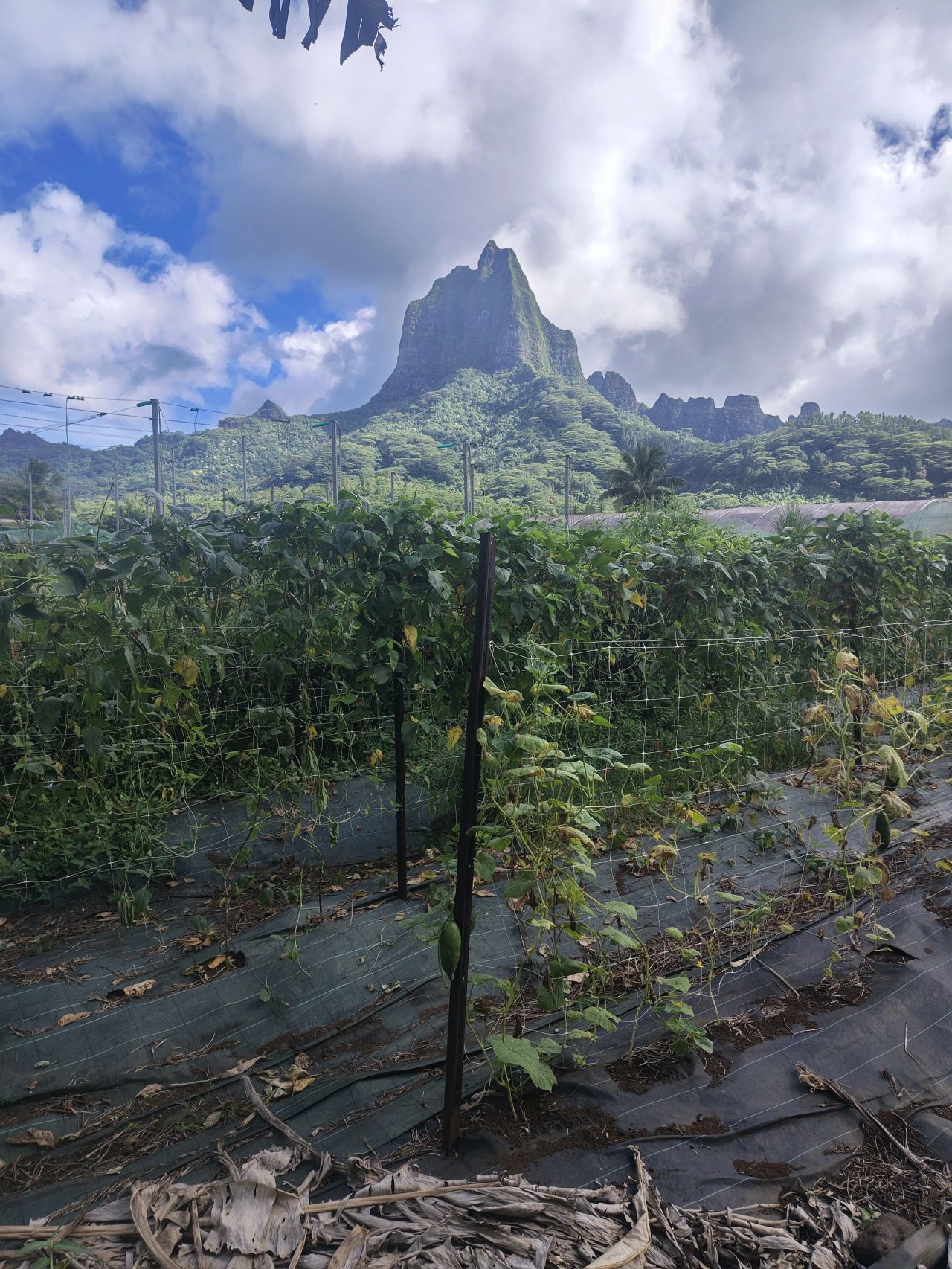
Moorea, French Polynesia
Organic Tropical Farm Optimisation on Moorea Island
On-site agronomic support for an organic farm in Moorea, focused on continuous harvest planning, irrigation improvements and biological plant protection.
Project overview
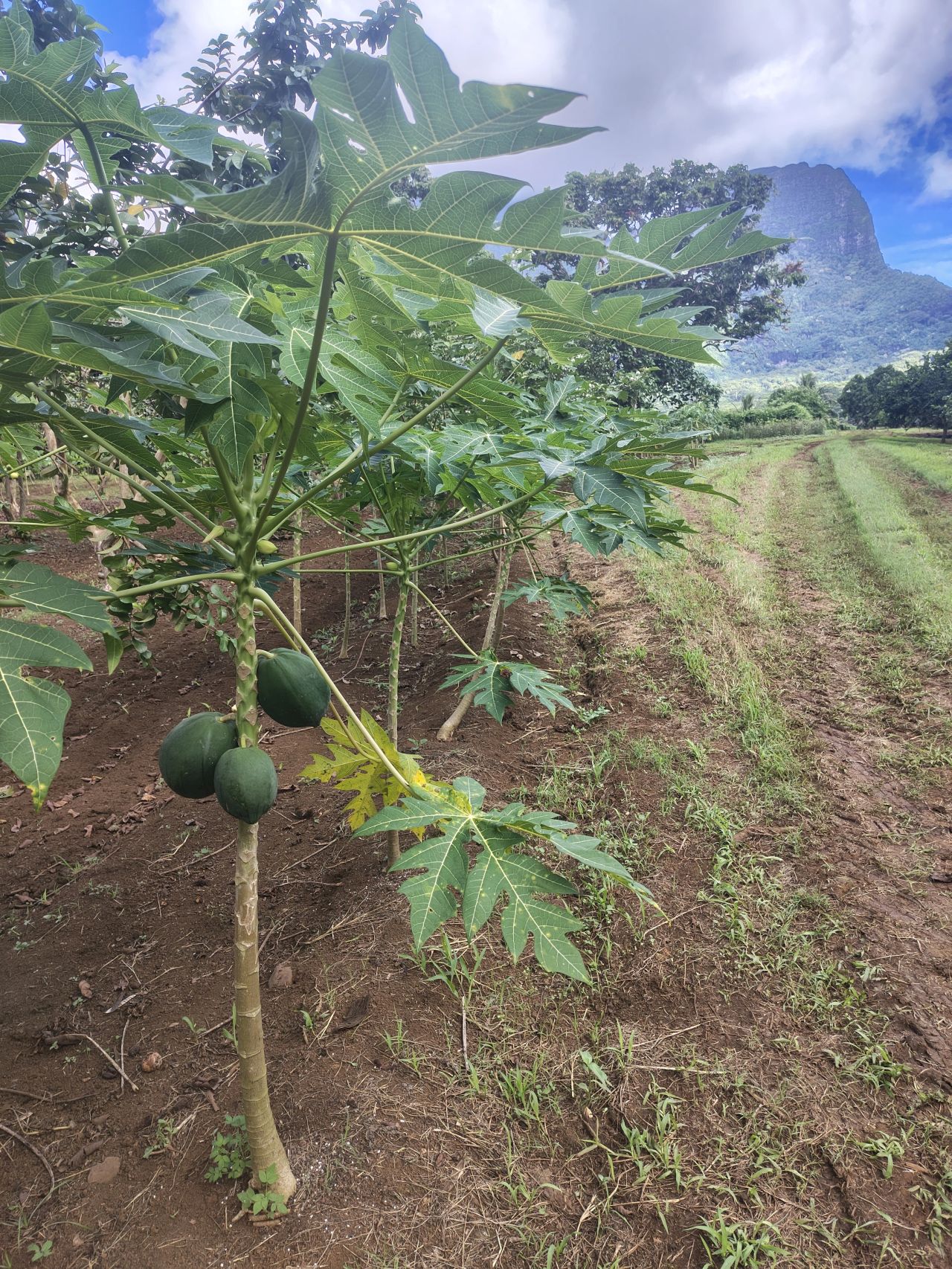
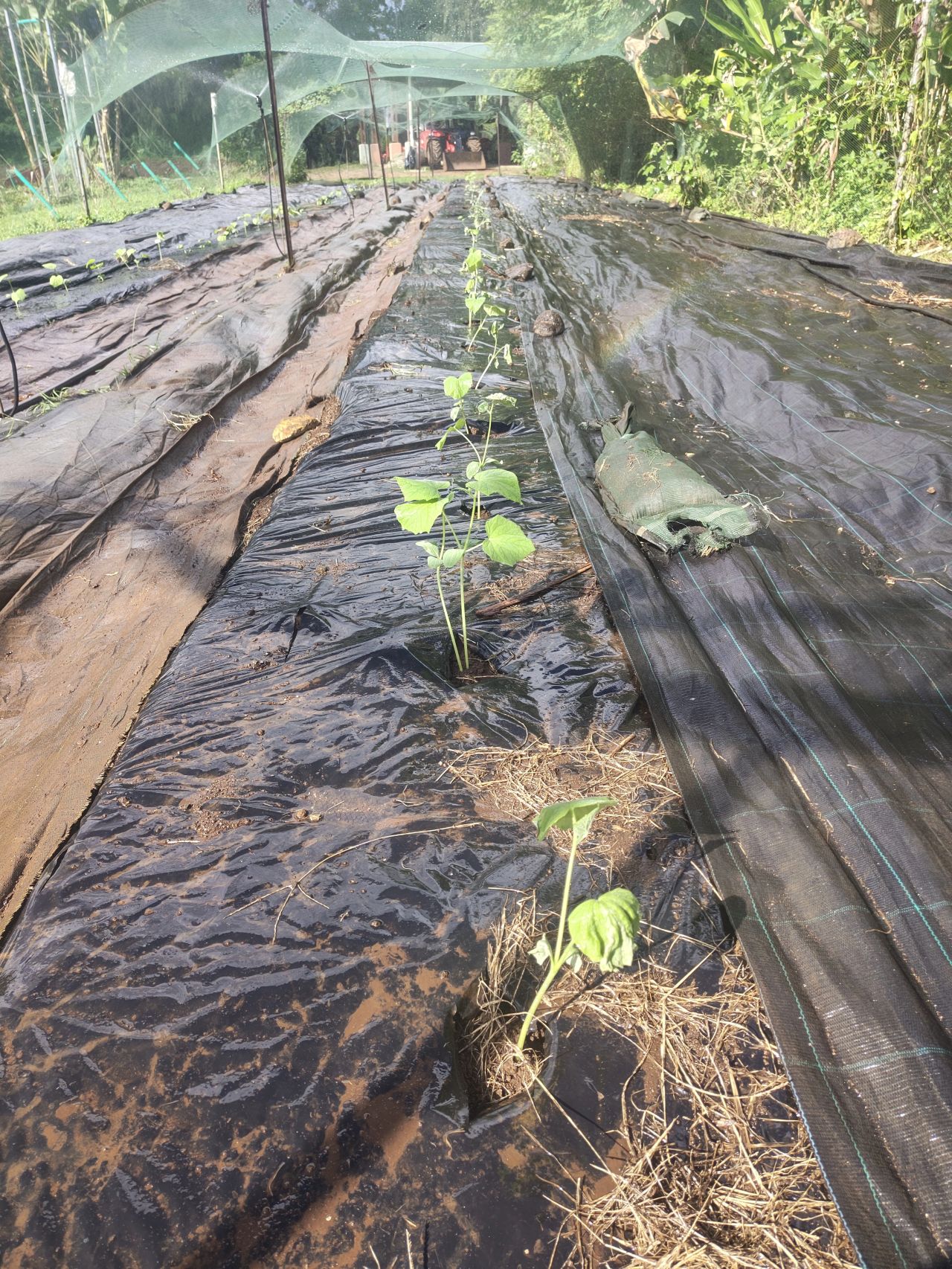
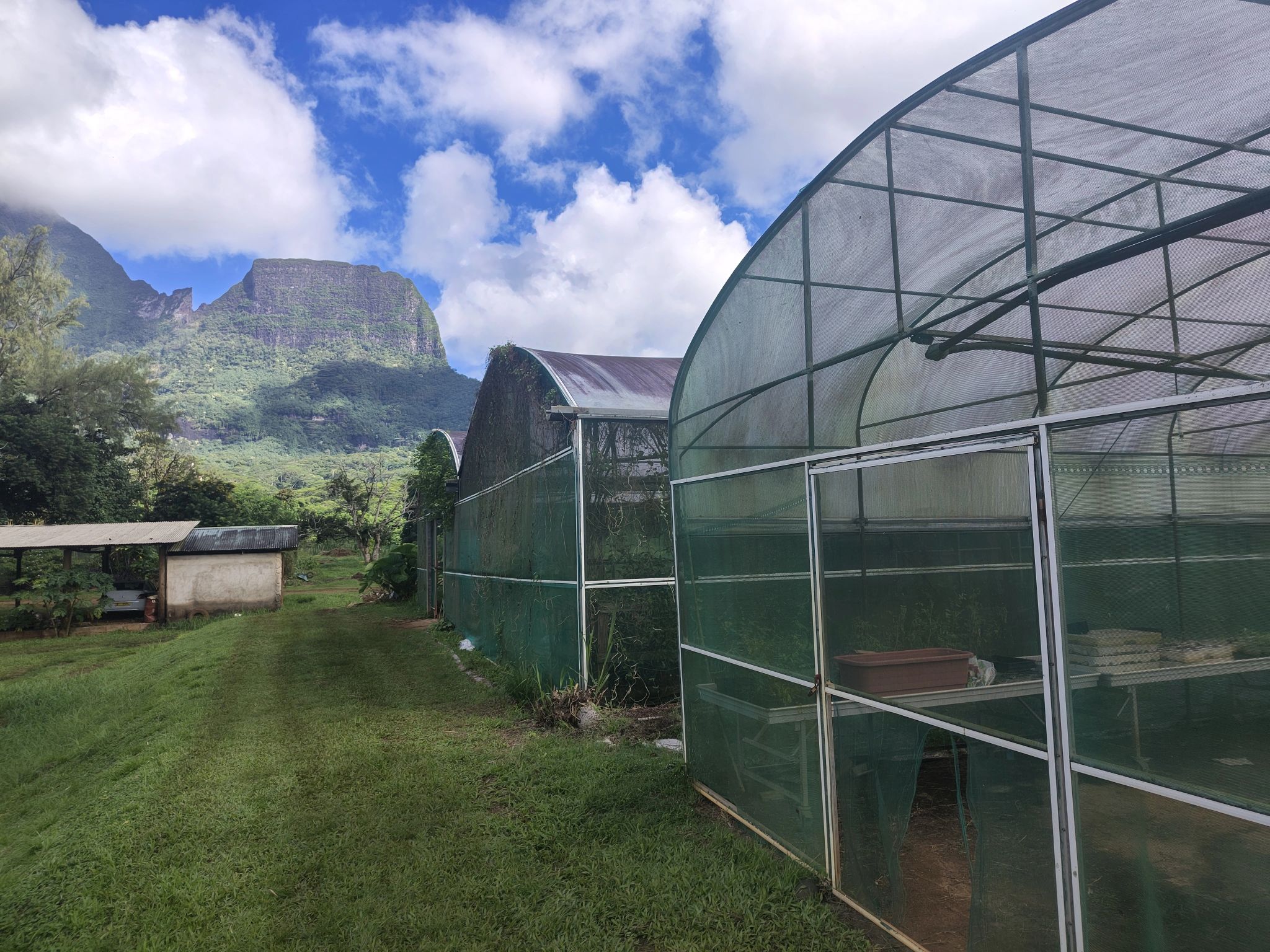
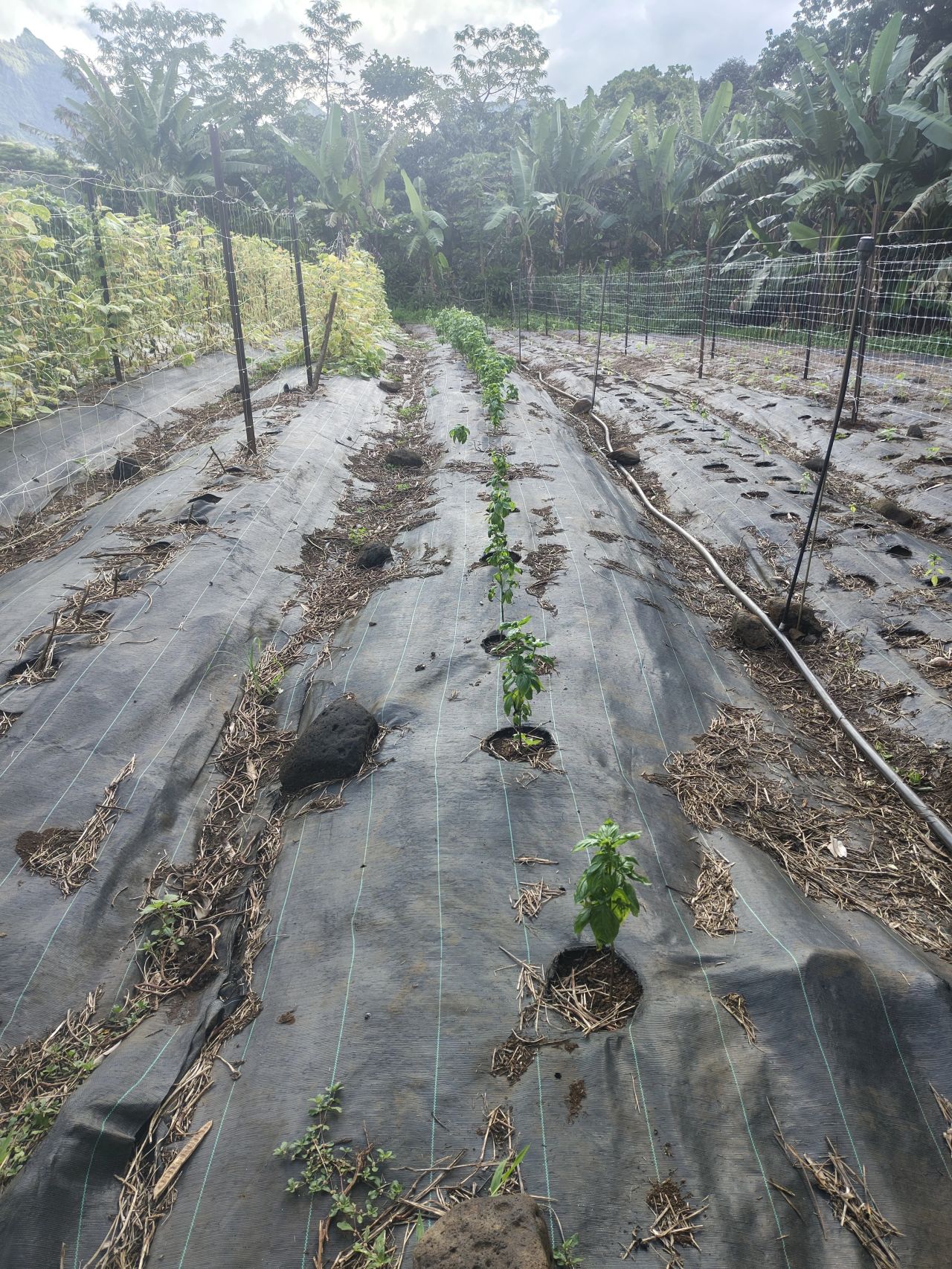
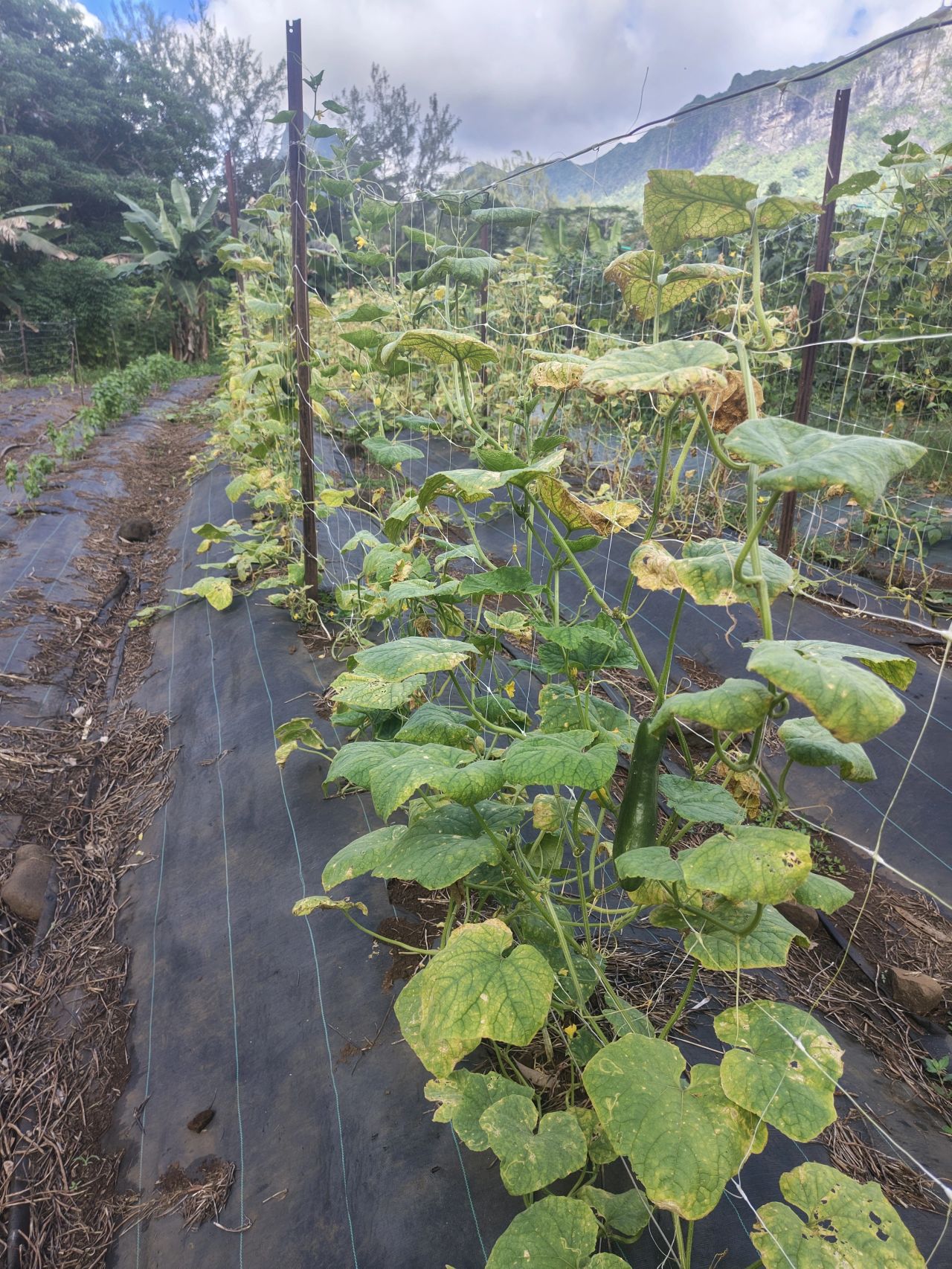
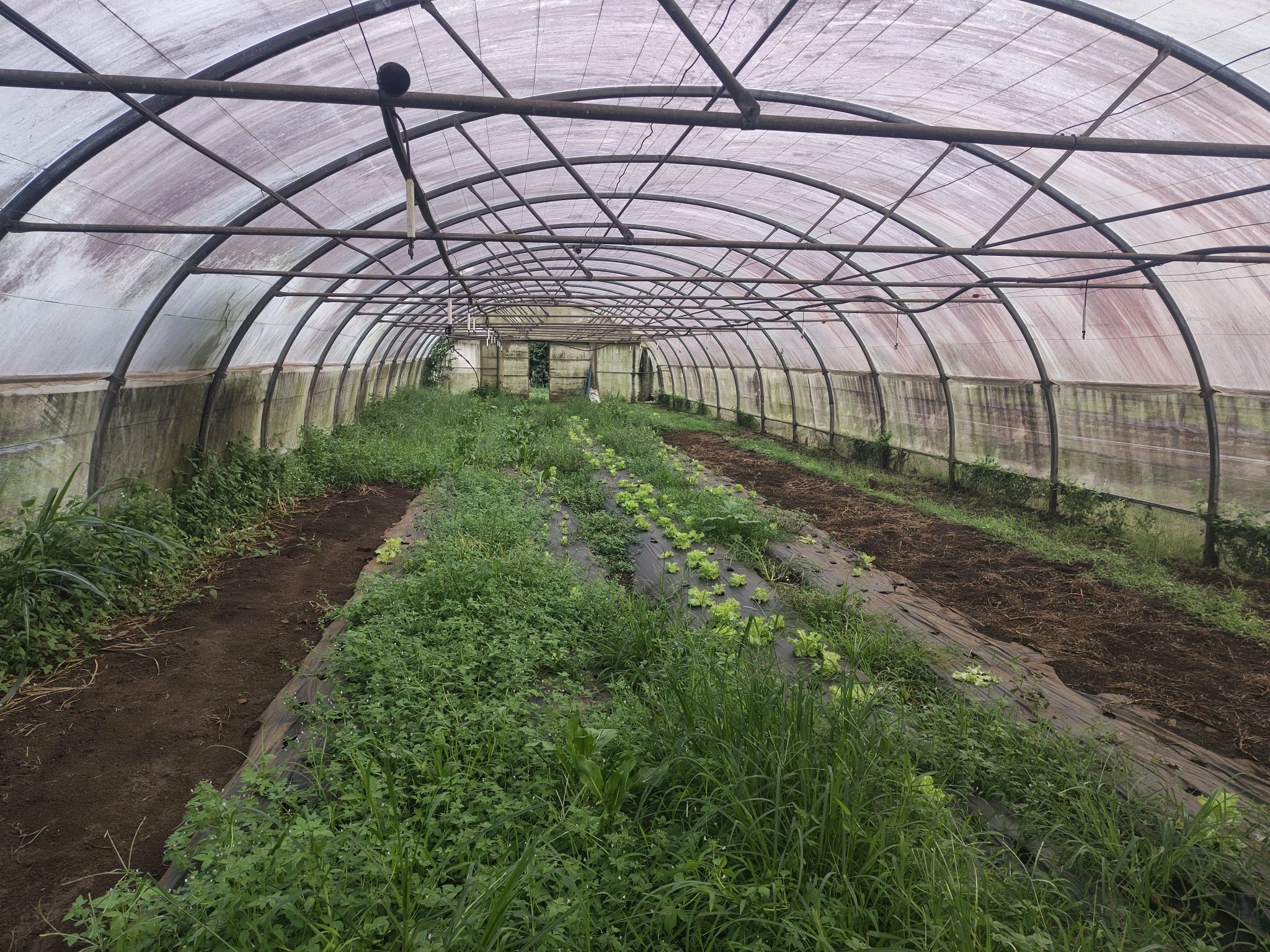
Crop Urbanis provided on-site agronomic support to a diversified organic farm on Moorea Island, French Polynesia, where tropical fruits and vegetables are cultivated together within the same production area. The project focused on improving production continuity and distributing harvests more evenly throughout the year. Crop schedules, planting dates and production cycles were reviewed to reduce gaps between harvest periods and support a more reliable supply of fresh produce. The work also included the introduction of improved irrigation approaches, trials of modern biological crop-protection methods and the development of a practical strategy for managing plant diseases under warm and humid tropical conditions. A major technical challenge was the control of Cercospora longissima, a fungal leaf-spot disease capable of reducing plant health, leaf quality and marketable yield. The objective was to develop an integrated management approach adapted to organic production and daily farm operations.
Challenges & approach
- Harvests from a diversified tropical farm needed to be distributed more evenly across the year.
- Irrigation and crop-protection practices had to work in warm, humid conditions while remaining compatible with organic production.
- Cercospora longissima required an integrated management approach combining sanitation, airflow, moisture control and monitoring.
Our contribution
- Crop Urbanis reviewed the farm’s production organisation and developed practical recommendations to improve harvest continuity, irrigation efficiency and plant health.
- Reviewing crop schedules and planting cycles to achieve more regular harvests.
- Improving the distribution of production throughout the year.
- Assessing the existing irrigation system and identifying opportunities for technical improvement.
- Introducing and testing irrigation methods adapted to tropical growing conditions.
- Strengthening phytomonitoring and early detection of crop stress and disease symptoms.
- Testing biological crop-protection methods compatible with organic production.
- Developing an integrated management strategy for Cercospora longissima.
- Improving sanitation, infected plant-material removal, airflow and moisture-management practices.
- Establishing practical monitoring and follow-up actions for evaluating the proposed changes.
- The recommendations connected crop planning, irrigation, plant health and biological protection within a single operational strategy adapted to the farm’s tropical environment.
Outcomes & proof
| Metric | Result | Context |
|---|---|---|
| Crop scheduling review | Completed | Planting dates and production cycles were mapped to improve harvest continuity. |
| Irrigation and biological-protection programme | Defined | Farm-adapted trials and monitoring actions were established. |
| Integrated disease-management strategy | Delivered | Practical measures addressed Cercospora, sanitation, airflow and moisture management. |
Project gallery